Six sides. Roll to meet one.
The work.
Two companies I founded, two years backing founders, and what I’m building now. One sold, one I shut down myself — here’s both, honestly.

Savior
Built and bootstrapped a hospital-management platform for tier-1 hospitals in India — scaled it to 85 hospitals, hit profitability, and got acquired by Zocdoc in 2020.
- Started out building an appointment-booking system. Spent time inside hospitals watching how the staff actually worked, and saw the real problem was messy offline data across the whole workflow — so I pivoted to software that ran the entire hospital operation.
- Built the MVP in 3 months and landed 2 hospital pilots. Designed workflows that cut patient-processing time and killed manual errors — the key was solving a painful daily problem, not a nice-to-have.
- Scaled to 35 hospitals in year one by going after chains like Fortis and Cloudnine for multi-location rollouts. 85 by year 3. No sales team — all of it word of mouth and referrals.
- Shipped v2.0 with patient-history analytics and decision-support, so doctors could make treatment calls with real data behind them. Built a team of 85 across engineering, operations and customer success.
- Hit profitability through subscriptions and premium tiers, bootstrapped the whole way. Zocdoc acquired us in March 2020 for their US expansion.

Career Leap
A community-first learning platform for tech professionals to build the soft skills that matter — from people who’d actually done it.
- Started as a WhatsApp community and grew to 10k users in 6 months. Built a mobile learning app that hit 100k+ watch hours. The community grew from 2k to 3,500+ through weekly sessions with industry leaders.
- Pivoted from the app to live cohorts once I talked to users and saw where the real opportunity was. Ran 2 cohorts with a 3-person team — trained 60 professionals, made ₹15L at ₹10–15k. Got 40% completion, way above the usual 5–10% for online courses.
- Added gamification that pushed session times up 50% and doubled retention. Also tested a B2B model — ran training programs inside 2 companies.
- Shut it down in 2023, when the unit economics didn’t work at scale.
Accel Atoms
Two years on the other side of the table, running Accel’s pre-seed program for 0→1 founders.
- Ran it end to end — picked the founders, built the program across 4 cohorts and 2 tracks, and sat with each team from rough idea to first cheque.
- It taught me to read the early signal fast: the teams that worked got inside their problem the way I once tried to get inside hospitals.
Most cat-food rankings are paid placements. Sniff scores any label on what’s actually in it — nobody can buy their way up. Hard part isn’t the app, it’s trusting the data.
5K scans · 1.2K foods rated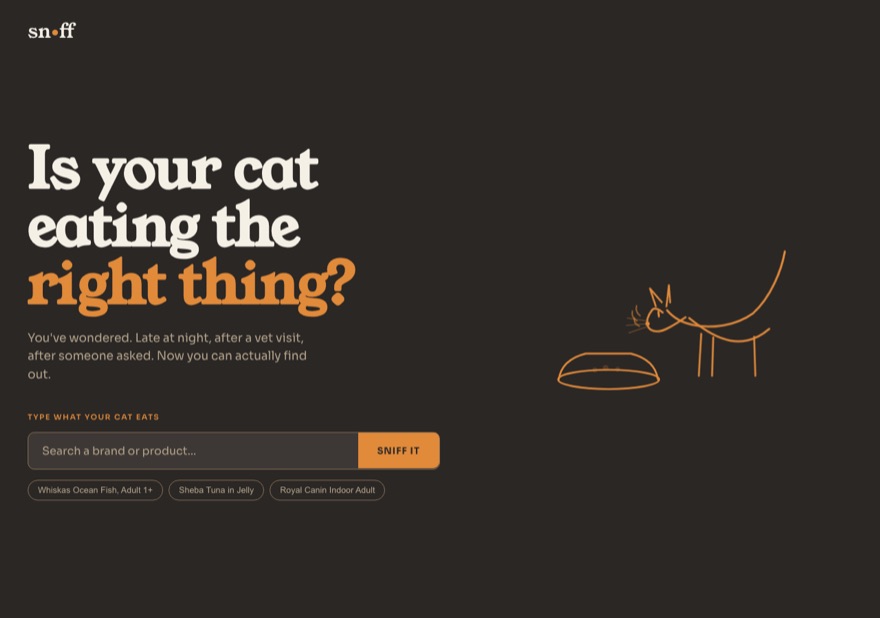
Pay in Indian tech is a black box you only crack by asking around. Answer a few questions, see the real range for your exact role and city — no signup, no catch.
12K checks · 50+ cities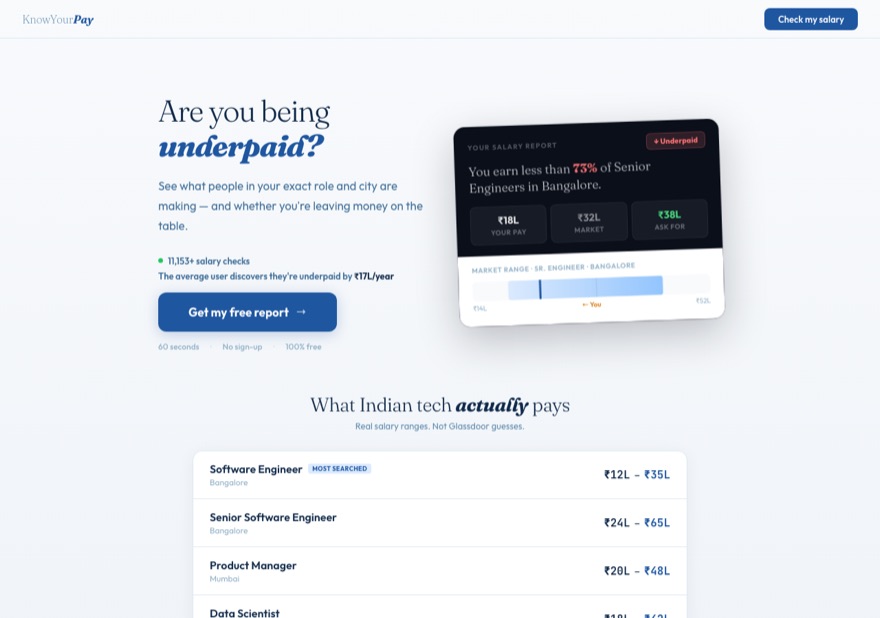
Reading frameworks doesn’t stop you freezing in the room. Practise PM interviews under real time pressure and get scored the moment you finish. The scoring is the whole product — and the hard bit to get right.
800+ PMs · 3K answers scored
The places you love get buried in chat threads and screenshots. Vouch keeps them in one list you can actually share. The newest one — just shipped.
One exit, one shutdown I owned, and back to building.
The earliest stage — a rough problem, no product yet, still figuring out if it's even real. I like being close to users, shipping fast, and being wrong quickly. Founder, founding PM, or a 0→1 lead.